
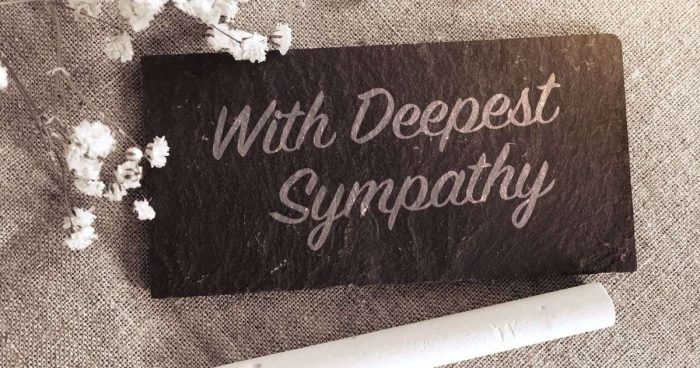
You’re sitting with a blank card in font of you and nothing feels right. Every sentene you start sounds either too formal, t casual, or just . . . hollow. Meanwhile, someone you care about is hurting and you desperately want them to know you’re there for them.
Here’s the most important thing to know right now: you don’t need perfect words. You need honest ones. After over 30 years of helping people find the right gifts and words for life’s hardest moments, I’ve learned that the cards people treasure most aren’t eloquent. They’re real.
Why Sympathy Messages Feel So Impossible to Write
Grief makes us afraid of saying the wrong thing, so we end up saying nothing. Or we default to phrases so generic they barely register. “Sorry for your loss” isn’t wrong. It just doesn’t land the way a more personal message does.
The good news is that a little specificity goes a long way. Even one sentence that acknowledges what this person is going through — not grief in general, but their loss, their situation — changes everything.
Sympathy Messages for the Loss of a Loved One
When You Don’t Know What to Say
“I’m so sorry. I don’t have the right words, but I want you to know I’m here.”
“I’m holding you close in my heart today and in the days ahead.”
“Your loved one mattered deeply And so do you.”
Warm and Comforting
“May you find small moments of peace as you move through this.”
“Wishing you comfort, rest, and people who show up for you.”
“May the memories that mean the most to you are the ones that come to you and bring you comfort now and in the days to ahead.”
When You Want to Acknowledge Their Pain
“I know your heart is hurting. I’m here — to talk, to sit with you, or just to simply listen.”
“Grief doesn’t follow a schedule. Please take all the time you need. You matter. And I’m not going anywhere.”
Sympathy Messages for Hard Times That Aren’t a Death
Not all sympathy messages are about loss. Sometimes people need comfort during life’s storms. Illness, divorce, overwhelm, or unexpected challenges are important times to let someone know you are thinking about them and that you care.
For Tough or Uncertain Times
“This is so hard, and I’m so sorry you’re going through it. I’m here for you.”
“You don’t have to go through this alone. Lean on me.”
“Sending strength for today and hope for what comes next.”
Gentle Encouragement
“One day at a time. I’m right here with you.”
“You’re stronger than you know, and you’re not walking this road alone.”
“Wishing you a quiet moment of peace in the middle of everything you are facing.”
Sympathy Messages for the Loss of a Pet
Pets are family. The grief is real, and it deserves to be acknowledged, not minimized.
“Your pet was so deeply loved, and that love doesn’t go away.”
“Wishing you comfort as you remember your sweet companion.”
“The joy your pet brought into your life — that says with you forever.”
Religious Sympathy Messages
People have different beliefs about life, death, and the afterlife as well as about God. Use these message only when you’re certain they fit the recipient’s beliefs.
“May God wrap you in His love and bring you peace in the days ahead.”
“Keeping you in my prayers during this heartbreaking time.”
“Praying you feel held and not alone.”
Short Messages for Small Cards
Sometimes the card is tiny — just room for a line or two. These work.
“Thinking of you.”
“With heartfelt sympathy.”
“Holding you in my heart today.”
“Wishing you peace.”
How to Make Any Messag More Personal
This is the single thing that transforms a good message into one someone keeps. When my husband died, the cards I returned to were the ones that mentioned him. A specific memory, something they loved about him, a moment they shared. Generic kindness is still kindness. But specific kindness is unforgettable.
Try adding just one of these:
A fond memory of the person they lost
Something you always admired about their loved one.
- A specific offer of help (“I’ll drop dinner off Tuesday — no need to respond.”
Simply: how much they mean to you.
Even one personal detail transforms your message from generic to meaningful.
When Words Aren’t Enough
Sometimes a card is enough. Especially when someone is deep in grief and struggling to get through each day. A tangible reminder that they’re cared for cna mean as much as any words you write.
When my husband died, a neighbor brought me a box of chocolates. Another dropped off coffee and cookies for my daughters who had come to be with me. Neither of these required a perfect note. They just showed up — and that was everything.
If you want to send something that does the same, these are some of my most-loved options for symapthy and comfort:
Each one is chosen to feel like a warm hug arriving at their front door.
What to Avoid in a Sympathy Card
- “Everything happens for a reason” — even if you believe it, this rarely comforts someone in acute grief.
- “I know how you feel” — you don’t and they know it.
- “At least. . .” — minimizing phrases (“at least they’re not suffering”) tend to land wrong.
- Comparing losses — their grief doesn’t need context or perspective right now.
- Silence — the fear of saying the wrong thing leads many people to say nothing at all. An imperfect message beats no message every time.
Final Thoughts
Remember: the most meaningful sympathy messages aren’t long, poetic, or perfect. They’re honest. They show up. They come from the heart. And the simple act of reaching out, of letting someone know they’re not invisible or alone in their pain, means more than you may ever know.
Your words matter.
Your kindness matters.
And the person receiving your message will feel it.
For more on giving sympathy gifts, see Sympathy Gifts – A Complete Guide to Thoughtful Support